A Comparative Analysis of Superior and Inferior Aluminum Tile Trims: Identification Criteria
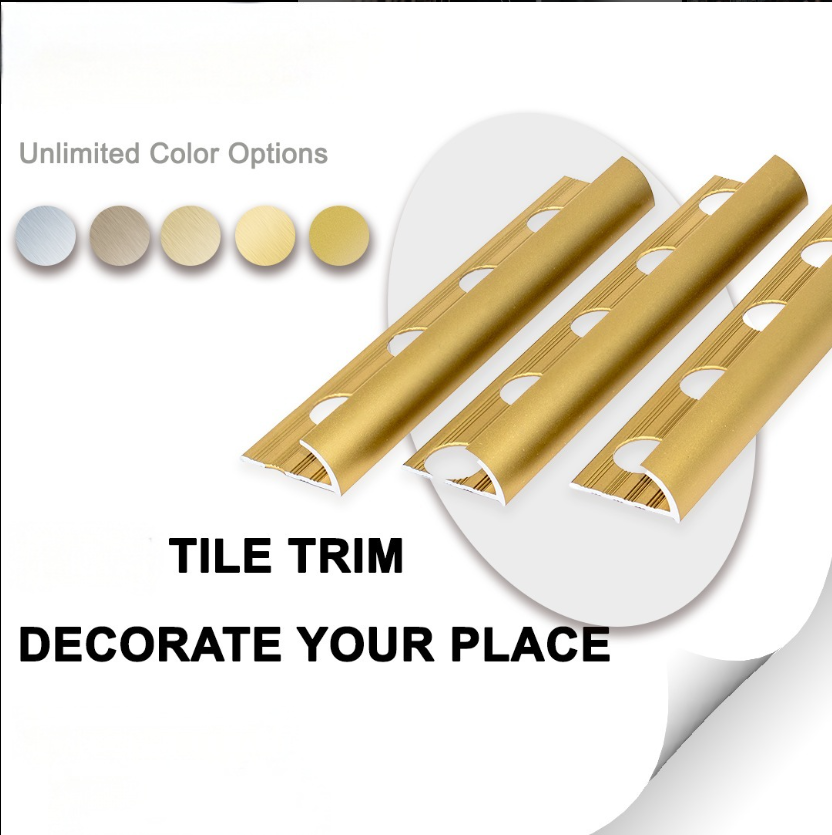
Aluminum tile trims are essential components in tiling engineering, functioning for edge sealing, corner protection, and seamless tile transitions. Their quality directly affects the decorative effect, tiling system service life, and safety. To avoid inferior products causing rework and extra costs, systematic identification criteria are critical. Disparities between superior and inferior trims can be judged via five core dimensions: material purity, surface treatment technology, dimensional accuracy, comprehensive performance, and installation adaptability.
Material Purity: The Core Determinant of Durability
Aluminum composition and purity are fundamental to trim durability. Superior trims use high-purity primary aluminum (typically 6063-T5 grade) with over 98% aluminum content. This material has uniform density, no impurities or internal bubbles, and excellent mechanical properties, maintaining structural integrity against moderate impact or pressure.
In contrast, inferior trims are made from recycled scrap aluminum via secondary smelting, contaminated with iron, zinc, and other impurities. This forms a loose, porous structure, making them brittle and easily deformed manually, with high risk of cracking during installation or service.
2. Surface Treatment Technology: An Indicator of Manufacturing Precision
Surface treatment reflects manufacturing precision, directly impacting aesthetics, corrosion resistance, and wear resistance. Superior trims adopt advanced standardized processes: anodic oxidation, electrophoretic coating, and electrostatic powder coating.
The coating has uniform thickness (anodic oxidation film ≥10μm) and strong substrate adhesion, ensuring durability.
It boasts wear, scratch, and UV resistance, retaining consistent color without sagging, aberration, or substrate exposure.
Inferior trims use low-cost simple spraying or no formal treatment. Their thin, poorly adherent coating peels, fades, or chips easily. Without anti-oxidation treatment, black spots form in 1-3 months in humid areas, damaging tiling integrity.
3. Dimensional Accuracy and Appearance Quality: Determined by Manufacturing Tolerance
Superior trims adhere to strict dimensional controls and exquisite finishing, featuring:
Cross-sectional tolerance ≤0.1mm (meets national/international standards), fitting 6-12mm thick tiles tightly.
Precision-cut edges (no burrs/flash) with rounded chamfers to prevent scratches.
High straightness (no bending/warping) for consistent installation.
Inferior trims have large dimensional deviations (tolerance >0.5mm), uneven width/thickness, and sharp burrs. Poor straightness causes gaps/warping post-installation, and crude card slots lead to loosening or detachment.
4. Comprehensive Performance: Evaluated by Durability and Stability
Superior trims deliver excellent performance: Vickers hardness ≥80HV, impact/bending resistance, and durability under foot traffic. They resist corrosion/aging (10+ year service life in humid areas) and have stable thermal expansion, avoiding shrinkage/cracking in extreme temperatures.
Inferior trims have low hardness, deforming permanently under minor pressure. Poor corrosion resistance causes rapid rusting, damaging aesthetics and stability. Unstable thermal properties lead to cracking/detachment in temperature-fluctuating environments.
5. Installation Adaptability: Influenced by Structural Design
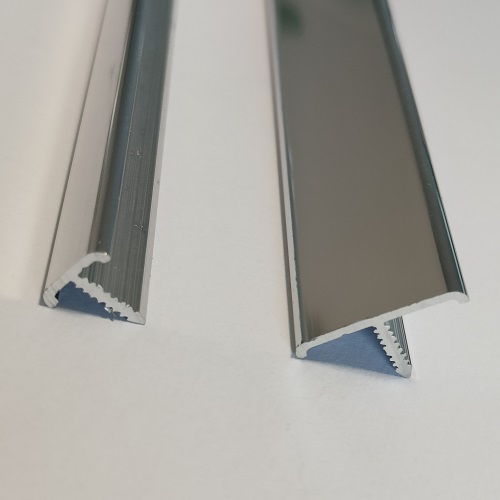
Superior trims have scientific back slots/serrations for secure bonding with mortar/adhesive. Compatible with internal/external corners for seamless splicing, they maintain intact cross-sections during cutting, reducing construction complexity.
Inferior trims lack anti-slip serrations or have poor slot designs, causing post-installation detachment. Mismatched corner dimensions create gaps, and brittle material chips/fractures during cutting, increasing costs.
Rapid Identification Guidelines for Routine Assessment
Weight Assessment: Superior trims are denser/heavier under the same specs; inferior ones are lightweight due to porosity.
Surface Inspection: Superior trims have uniform, smooth surfaces; inferior ones show scratches, aberration, or graininess.
Hardness Testing: Light scratching leaves minor marks on superior trims; inferior ones peel/expose substrate. Superior trims resist bending, while inferior ones deform/fracture easily.
Detail Verification: Superior trims have burr-free, consistent dimensions; inferior ones are roughly machined with uneven sizes.
In conclusion, superior trims enhance tiling quality and service life. While inferior products appear cost-effective initially, they incur high maintenance/rework costs. Following the above criteria enables professionals to select products meeting project requirements.